
The Difference Between Finish Carpentry and Custom Millwork (And Why It Matters)
You're renovating a room and have a wish list: new crown moulding, wall paneling, a fireplace surround, and built-in cabinetry. Maybe you're also updating the staircase or adding architectural details to give the space more character.
Do you need a finish carpenter? A custom millwork company? Both?
The terms finish carpentryand custom millwork are often used interchangeably, and for good reason. There is plenty of overlap between the two. But there are also important differences in what is being created, how customized it needs to be, and where much of the work takes place.
Neither is inherently better than the other. Understanding the distinction simply helps homeowners choose the right level of craftsmanship for the project and know what to expect along the way.
At Unique Stairways, our capabilities span both finish carpentry and custom millwork, allowing us to determine the right approach for the home, the design, and the desired result.
What Is Finish Carpentry?
Think of a home under construction.
Rough carpentry creates much of the structure behind the walls. Finish carpentry creates many of the details you actually see once construction is complete.
Finish carpentry generally takes place toward the later stages of a construction or renovation project and involves the detailed woodworking that gives a room its finished architectural character.
This can include:
Crown moulding and baseboards
Window and door casings
Interior doors
Wainscoting
Trim packages
Stair trim and finish details
Installation of architectural elements
While some preparation may happen elsewhere, much of finish carpentry involves precisely measuring, cutting, fitting, joining, and installing materials at the job site.
And the word "finish" shouldn't be mistaken for simple.
Beautiful finish carpentry requires tremendous skill. Corners need to meet cleanly. Mouldings need to transition naturally. Reveals need to remain consistent. Every detail needs to work with the architecture around it.
When done well, finish carpentry can completely change how polished and cohesive a home feels.
What Is Custom Millwork?
Custom millwork takes woodworking another step by designing and fabricating architectural wood elements specifically for an individual space or project.
Rather than beginning with an existing product and adapting it to the room, custom millwork often begins with the room itself.
What does the architecture call for? What proportions work best? Is there an existing detail that needs to be replicated? Is the homeowner or designer envisioning something that simply doesn't exist in a catalog?
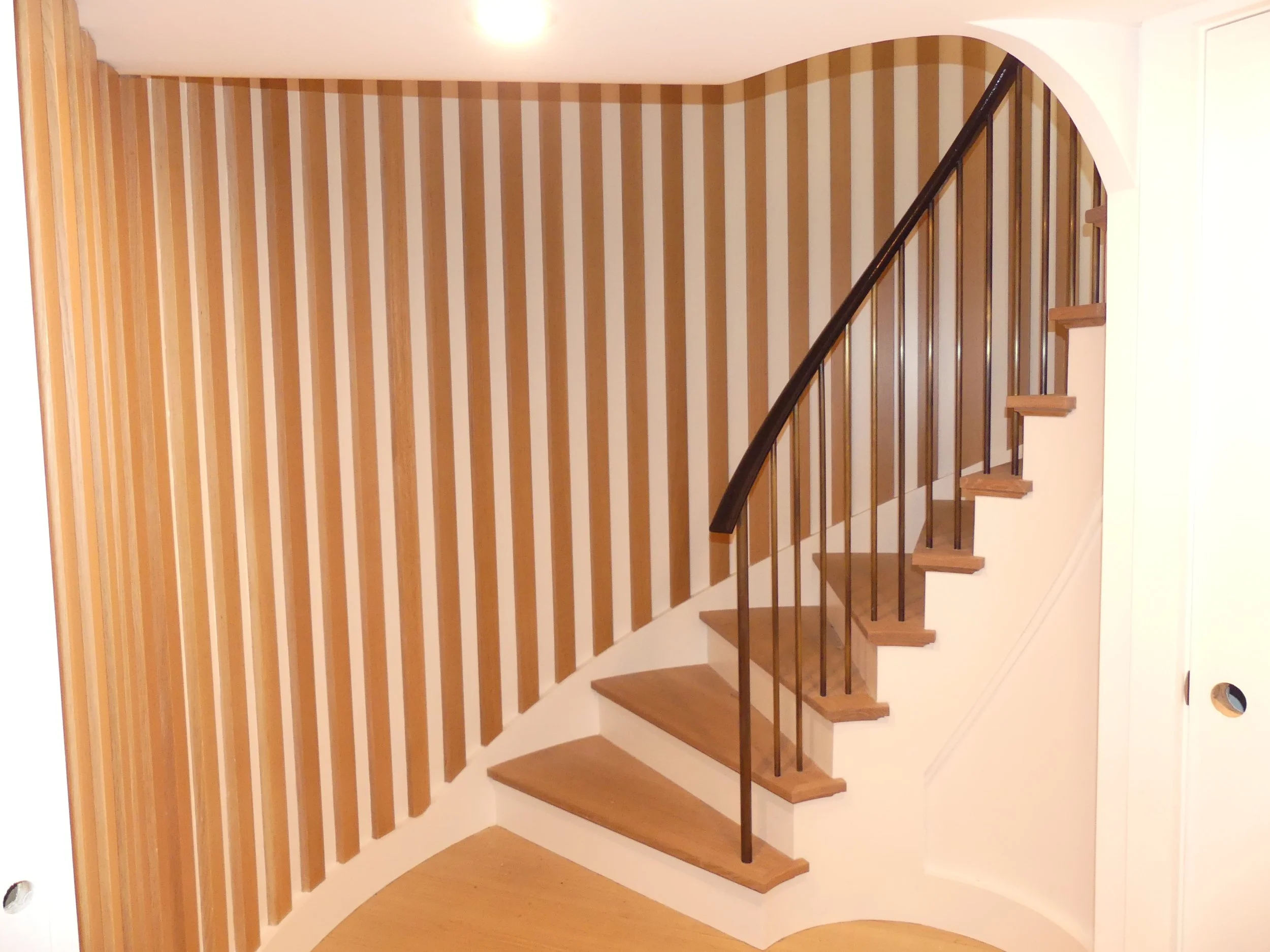
Custom millwork can include:
Custom staircases and stair components
Built-in cabinetry and shelving
Entertainment walls
Custom closets and mudrooms
Window seats and reading nooks
Wall paneling
Fireplace surrounds and mantels
Custom moulding profiles
Specialty architectural details
One-of-a-kind wood features
Depending on the project, the process may involve detailed measurements, shop drawings, material selection, fabrication, assembly, finishing, and installation.
The result is architectural woodwork created specifically for the home rather than a standard product modified to fit it.
Where Finish Carpentry and Custom Millwork Overlap
Here's where the distinction becomes less clear.
Many architectural features can fall into either category depending on how they're designed and created.
Take wainscoting.
Installing a traditional wainscoting design using readily available mouldings may primarily be a finish carpentry project. Designing an elaborate paneled wall with custom profiles, carefully calculated proportions, and details fabricated specifically for the room begins moving into custom millwork.
The same can be true of fireplace surrounds, mouldings, stair components, wall paneling, and other architectural details.
The difference isn't always the finished product. Sometimes it's the level of customization behind it.
And on many projects, finish carpentry and custom millwork work hand in hand. A piece may be designed and fabricated in a workshop and then require highly skilled finish carpentry to integrate it seamlessly into the home.
Stock, Modified, or Truly Custom?
Another way to understand the difference is to think about the level of customization a project requires.
Stock: A readily available product or profile is selected, precisely cut, fitted, and installed in the home.
Modified: Existing materials or components are adapted, combined, or altered to achieve a more distinctive result.
Custom: A component or architectural feature is designed and fabricated specifically for the home, whether to achieve an original vision or replicate something that already exists.
None of these approaches is automatically the right or wrong choice.
A newer home may look beautiful with a readily available crown moulding profile expertly installed by a finish carpenter. A historic home with original mouldings that haven't been manufactured for a century may require a custom profile to maintain its architectural character.
The right solution depends on the home, the design, the project's goals, and the desired finished result.
When Does Custom Millwork Make Sense?
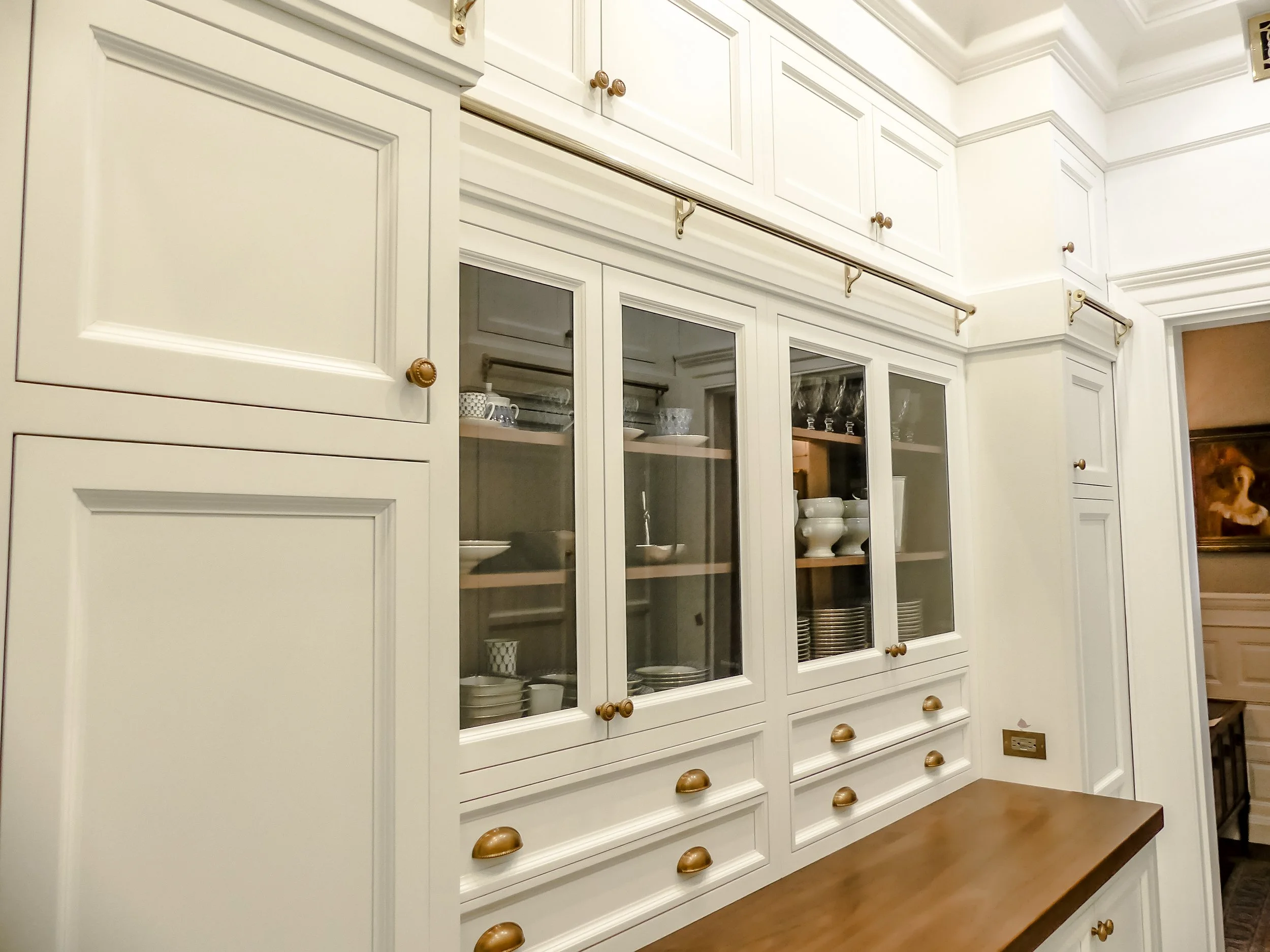
Not every woodworking project needs to be completely custom. But there are situations where custom fabrication can make an enormous difference.
Custom millwork may be the right choice when:
Standard dimensions don't work for the space.
You're matching existing or historic architectural details.
You have a specific design vision that can't be achieved with readily available products.
The project requires unusual proportions, curves, configurations, or transitions.
Multiple architectural elements need to work together cohesively.
You want to create something truly one of a kind.
Craftsmanship, longevity, and architectural integration are priorities.
Custom millwork can also be particularly valuable in spaces where every inch matters. Built-ins, mudrooms, closets, window seats, and cabinetry can be designed around the exact dimensions of a room, turning otherwise unused or awkward areas into functional parts of the home.
Craftsmanship Matters in Both
It's tempting to think of custom millwork as the more sophisticated cousin of finish carpentry.
That's not really the case.
Both require craftsmanship, precision, experience, and a trained eye.
A beautiful piece of crown moulding can look terrible if the miters don't meet cleanly. A custom paneled wall can lose its impact if the proportions aren't right. And even a beautifully fabricated built-in can fall short if it isn't installed precisely within the room.
The quality is often found in details most homeowners won't consciously notice: a consistent reveal, a seamless transition, balanced proportions, clean joinery, carefully selected wood grain, or trim that meets another architectural element exactly where it should.
When everything is done correctly, you don't necessarily notice the individual decisions.
You notice that the room simply feels right.
Finish Carpentry or Custom Millwork: Which Does Your Project Need?
Finish carpentry may be right when: you're installing or upgrading trim, mouldings, doors, or architectural finishes using readily available materials.
Custom millwork may be right when: your project requires something designed or fabricated specifically for your home, architecture, or design vision.
You may need both when: custom-fabricated architectural elements need to be precisely installed and integrated into the surrounding space.
Not sure? An experienced woodworking professional can evaluate your project and recommend the approach that makes the most sense for your home, design, and budget.
More Than a Label: Choosing the Right Expertise
Ultimately, homeowners shouldn't have to determine whether every element of their project technically qualifies as finish carpentry or custom millwork.
That's the craftsman's job.
What's more important is choosing a company with the capabilities to recognize what the project requires and execute it appropriately.
At Unique Stairways, that may mean expertly installing a finish trim package in one home. In another, it could mean developing shop drawings and fabricating a completely custom architectural feature. A larger renovation might require a combination of custom fabrication and detailed finish carpentry to bring everything together.
Our capabilities encompass the entire process:
Design → Fabrication → Installation → Finish
That allows the solution to be driven by the project rather than forcing the project into a predetermined category.
The Details Define the Finished Home
Most homeowners aren't going to walk into their newly completed room and say, "That's beautiful custom millwork rather than finish carpentry."
They're going to notice how beautifully everything comes together.
The moulding looks like it belongs with the architecture. The built-in fits the room perfectly. The staircase feels integrated with the rest of the home. The paneling has the right proportions. The transitions are seamless.
Understanding the difference between finish carpentry and custom millwork can help you make more informed decisions at the beginning of a project. But ultimately, the terminology matters far less than the craftsmanship behind it.
Whether a project calls for expertly executed finish carpentry, one-of-a-kind custom millwork, or a combination of both, the goal is the same: architectural details that fit beautifully, complement the home, and stand the test of time.
Not Sure What Your Project Requires?
Whether you're considering custom millwork, finish carpentry, a new staircase, built-in cabinetry, or architectural details throughout your home, Unique Stairways can help determine the right approach for your space and your vision.
Contact Unique Stairways to discuss your project and explore what's possible for your home.
Explore More
Continue exploring the craftsmanship, process, and possibilities behind custom woodworking:
Unique Stairways specializes in custom staircases, architectural millwork, built-in cabinetry, wall paneling, fireplace surrounds, mouldings, handrails, finish carpentry, historic restoration, and one-of-a-kind woodworking features. Serving homeowners, builders, architects, and interior designers throughout Massachusetts and New England, our team combines thoughtful design, skilled fabrication, premium materials, and expert installation to create architectural woodwork that enhances the character, function, and lasting value of every home.